On-Page SEO: The Complete Guide to Ranking Higher in 2025
What Is On-Page SEO and Why Does It Matter?
In the world of digital marketing, on-page SEO remains one of the most crucial factors for achieving higher search rankings. The numbers tell a compelling story: 53.3% of all website traffic comes from organic search, making SEO the top driver of web traffic in 2025. Even more impressive, 91% of respondents reported that SEO positively impacted website performance and marketing goals in 2024.
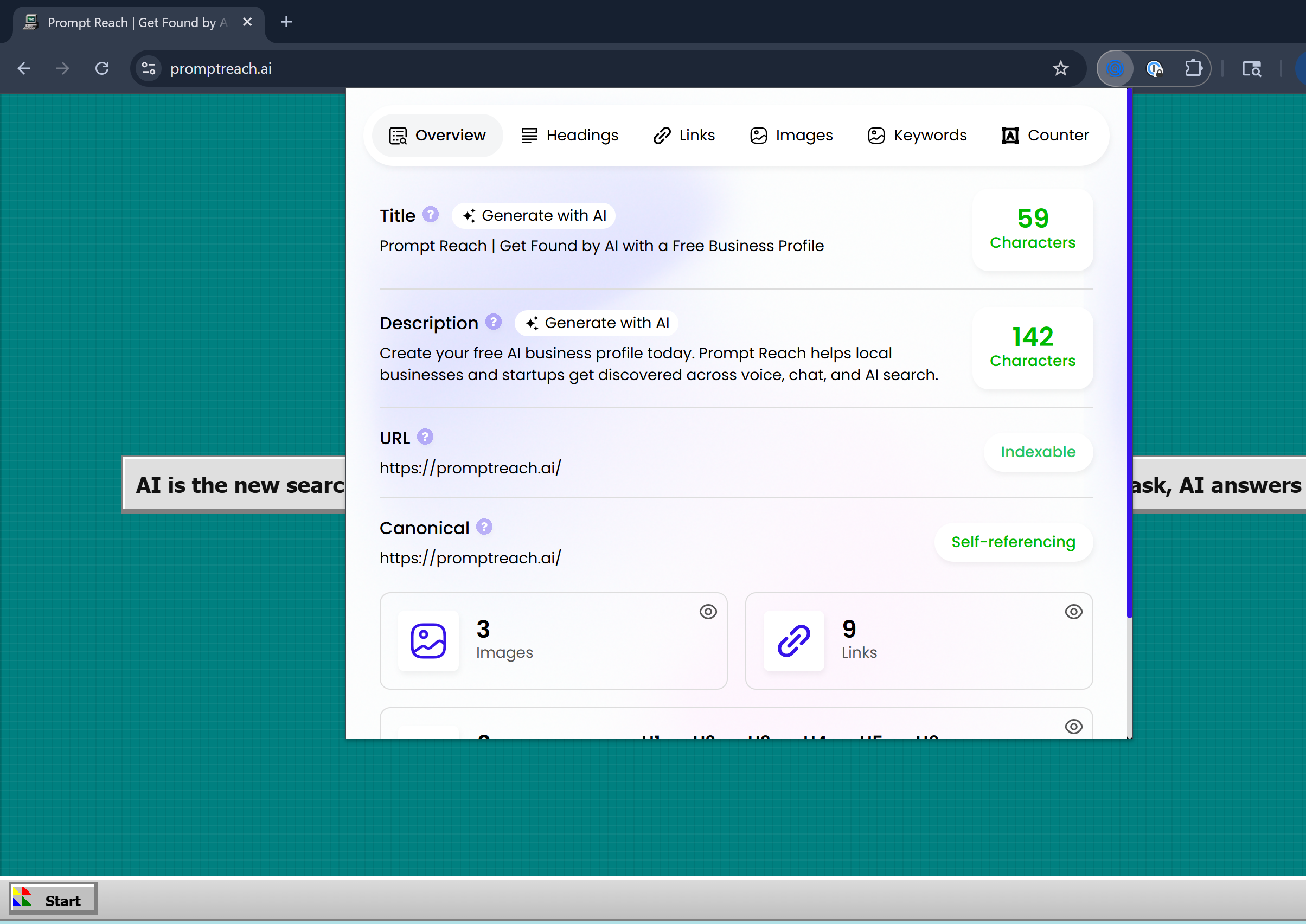
Unlike off page SEO tactics that focus on building backlinks and external signals, on-page SEO involves optimizing elements directly on your website to improve visibility in search engine results pages (SERPs). This includes everything from crafting compelling title tags and meta descriptions to structuring your content with strategic headings and implementing effective internal linking.
The beauty of on-page SEO is that you have complete control over these elements. You don’t need to rely on other websites or wait for external factors to align, you can implement changes today and start seeing results. Free tools like OnPageSEO.ai can help this process by analyzing your pages and providing actionable recommendations.
The Core Elements of On-Page SEO
1. Title Tags: Your First Impression in Search Results
Your title tag is arguably the most important on-page SEO element. It’s the clickable headline that appears in search results and tells both users and search engines what your page is about. Ranking on the first page is key.
Best practices for title tags:
- Keep titles between 50-65 characters to prevent truncation in search results
- Include your primary keyword naturally, preferably near the beginning
- Make titles compelling and click-worthy while accurately representing your content
- Avoid keyword stuffing, focus on readability and user value
Using an on-page SEO analyzer can help you evaluate whether your title tags are properly optimized and competitive compared to top ranking pages in your niche.
2. Meta Descriptions That Drive Clicks
While meta descriptions aren’t a direct ranking factor, they significantly impact click-through rates, which can indirectly influence your search rankings. A well-crafted meta description acts as your page’s elevator pitch in search results.
Creating effective meta descriptions:
- Aim for 70-155 characters to display fully in search results
- Include your target keyword and related terms naturally
- Write compelling copy that encourages users to click
- Highlight the unique value or benefit your content provides
3. Header Tags: Structuring Content for Success
Header tags (H1, H2, H3, etc.) create a logical content hierarchy that helps both readers and search engines understand your page structure. Your H1 tag should contain your main topic and primary keyword, while H2 and H3 tags break content into digestible sections.
Proper header tag usage improves user experience by making content scannable and helps search engines grasp your content’s key themes and subtopics. On Page SEO can audit your header structure to ensure it follows best practices and supports your keyword strategy effectively.
4. Content Optimization: Quality Meets Strategy
Content remains king in the world of SEO, but quality content alone isn’t enough—you need strategic optimization. Modern on-page SEO requires creating comprehensive, valuable content that satisfies user intent while naturally incorporating relevant keywords.
Key content optimization strategies:
- Focus on search intent—understand what users really want when they search for your target keyword
- Create comprehensive content that thoroughly covers your topic
- Use keywords naturally throughout your content, especially in the first 100-150 words
- Include semantic keywords and related terms that provide context
- Break up long text with subheadings, bullet points, and short paragraphs
- Aim for content length that matches or exceeds top-ranking competitors
- Update existing content regularly to maintain freshness and relevance
According to research from Conductor, organic search produced 33% of overall website traffic across seven key industries in 2024, underscoring the importance of well-optimized content.
Advanced on-page SEO tools can analyze your content against top competitors, identifying gaps in topic coverage and suggesting related keywords you might have missed. This competitive intelligence is invaluable for creating content that truly stands out.
5. URL Structure: Clean and Descriptive
Your URL structure contributes to both user experience and search engine optimization. Clean, descriptive URLs help search engines understand page content and make links more shareable.
URL optimization best practices:
- Use short, descriptive URLs that include your target keyword
- Separate words with hyphens, not underscores
- Avoid unnecessary parameters, numbers, or special characters
- Use lowercase letters consistently
- Keep URLs simple and human-readable
For example: yoursite.com/on-page-seo-guide is far better than yoursite.com/page?id=12345&cat=seo
6. Internal Linking: Building Your Site’s Authority Network
Internal linking is one of the most underutilized on-page SEO strategies. Strategic internal links distribute page authority throughout your site, help search engines discover and index content, and improve user navigation.
Effective internal linking strategies:
- Link to relevant pages where it naturally fits within your content
- Use descriptive anchor text that indicates what the linked page is about
- Avoid generic phrases like “click here” or “read more”
- Link to both new and older content to distribute authority
- Create topic clusters by linking related content together
- Ensure important pages receive more internal links
Comprehensive on-page SEO analysis should include internal linking audits to identify orphaned pages, broken links, and opportunities to strengthen your site’s link architecture.
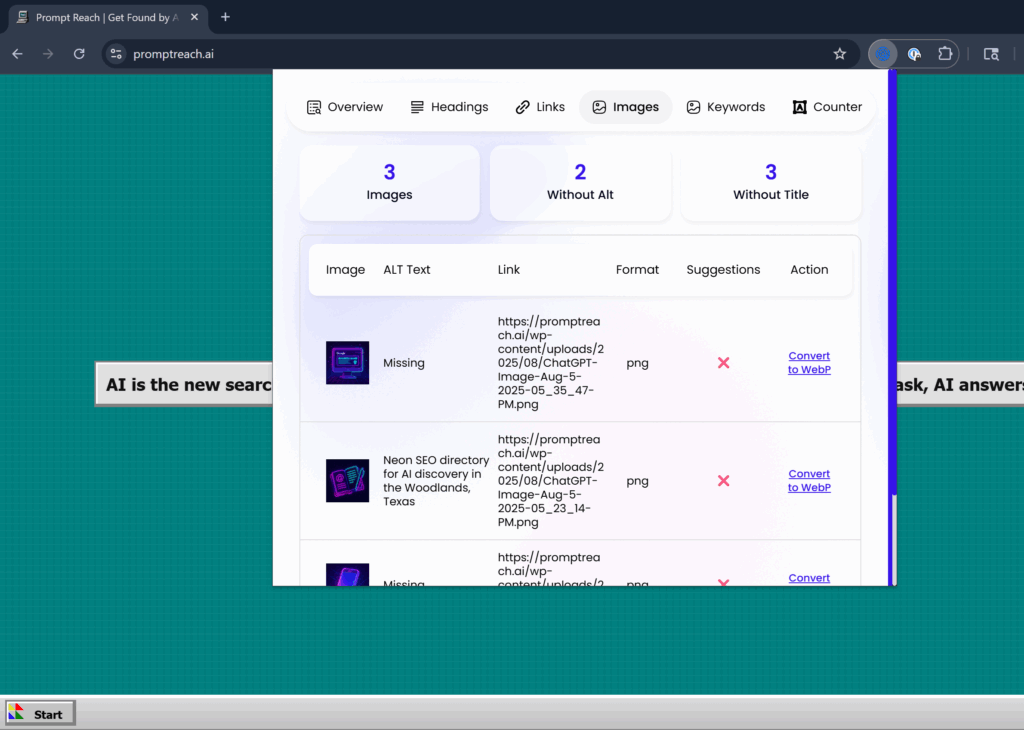
7. Image Optimization: Visual Content That Ranks
Search results with videos drive 157% more organic traffic, and video content has a 41% higher CTR than text-only pages. While this statistic focuses on video, images are equally important for engaging users and improving SEO when properly optimized.
Image SEO best practices:
- Use descriptive, keyword-rich file names (e.g.,
on-page-seo-checklist.jpginstead ofIMG_1234.jpg) - Add alt text that describes the image content and includes relevant keywords
- Compress images to improve page load speed without sacrificing quality
- Use appropriate image formats (WebP for modern browsers, JPEG for photos, PNG for graphics)
8. Page Speed and Core Web Vitals
Page speed has become increasingly important for on-page SEO, especially with Google’s emphasis on Core Web Vitals. These metrics measure loading performance, interactivity, and visual stability—all critical factors for user experience and rankings.
Improving page speed:
- Minimize HTTP requests by combining files
- Enable browser caching
- Minify CSS, JavaScript, and HTML
- Use a content delivery network (CDN)
- Optimize images and implement lazy loading
- Choose fast, reliable hosting
- Eliminate render-blocking resources
Page speed is a critical ranking factor that on-page SEO tools should monitor alongside traditional optimization elements like keywords and meta tags.
9. Mobile Optimization: A Non-Negotiable Requirement
61% of organic search engine visits come from mobile devices, making mobile optimization absolutely essential. With mobile-first indexing, Google predominantly uses the mobile version of your content for indexing and ranking.
Mobile optimization essentials:
- Implement responsive design that adapts to all screen sizes
- Ensure text is readable without zooming (minimum 16px font size)
- Make buttons and links easy to tap with adequate spacing
- Avoid intrusive interstitials or pop-ups
- Test mobile usability regularly with Google’s Mobile-Friendly Test
10. Schema Markup: Speaking Search Engines’ Language
Schema markup is structured data that helps search engines understand your content better and can result in rich snippets in search results. While technical, implementing schema can give you a competitive edge by making your listings more prominent and informative.
Common schema types:
- Article schema for blog posts and news content
- Product schema for e-commerce pages
- Review schema for ratings and testimonials
- FAQ schema for frequently asked questions
- Local business schema for location-based businesses
- How-to schema for tutorial content
Creating an On-Page SEO Workflow
Implementing on-page SEO effectively requires a systematic approach. Here’s a practical workflow you can follow:
- Keyword Research: Start by identifying target keywords that match user intent and have reasonable search volume
- Competitor Analysis: Analyze top-ranking pages to understand what’s working in your niche
- Content Creation: Develop comprehensive, high-quality content that addresses user needs
- On-Page Optimization: Implement all the technical elements—title tags, meta descriptions, headers, etc.
- Internal Linking: Connect your new content to relevant existing pages
- Quality Assurance: Check for broken links, proper formatting, and mobile responsiveness
- Performance Monitoring: Track rankings, traffic, and engagement metrics
- Continuous Improvement: Update and refresh content based on performance data
Using a comprehensive on-page SEO platform can automate many of these steps, providing real-time feedback as you optimize your content and identifying issues before they impact rankings.
Common On-Page SEO Mistakes to Avoid
Even experienced marketers make on-page SEO mistakes that can hurt rankings. Here are the most common pitfalls:
Keyword stuffing: Overusing keywords makes content unreadable and triggers search engine penalties. Focus on natural language and semantic variations instead.
Duplicate content: Having identical or very similar content across multiple pages confuses search engines and dilutes ranking potential. Each page should serve a unique purpose.
Thin content: Pages with little substantive content rarely rank well. Aim for comprehensive coverage that fully answers user queries.
Ignoring user intent: Optimizing for the wrong intent means attracting visitors who quickly bounce. Always match content to what users actually need.
Neglecting updates: Outdated content loses relevance and rankings over time. Regular updates signal freshness and maintain accuracy.
Ignoring zero-click searches: 64% of Google searches are zero-click, meaning users find what they need directly in search results. Optimize for featured snippets and answer boxes to capture visibility even in zero-click scenarios.
Advanced On-Page SEO Techniques for 2025
As search algorithms become more sophisticated, advanced optimization techniques can provide a competitive advantage:
Semantic SEO: Move beyond exact-match keywords to incorporate related terms, synonyms, and concepts that provide topical depth. Search engines now understand context and relationships between concepts.
Topic clusters: Organize content around pillar pages and supporting cluster content, with strategic internal linking connecting related topics. This demonstrates topical authority to search engines.
User engagement signals: While controversial, many SEO experts believe metrics like dwell time, bounce rate, and click-through rate influence rankings. Optimize for engagement by creating compelling content that keeps users on your page.
E-E-A-T optimization: Google values content that demonstrates Experience, Expertise, Authoritativeness, and Trustworthiness. Include author bios, citations, original research, and credentials where relevant.
Featured snippet optimization: Structure content to answer common questions concisely, use numbered or bulleted lists, and define terms clearly in the first paragraph to increase chances of capturing featured snippets.
Modern on-page SEO tools incorporate these advanced techniques into their analysis, helping you optimize for semantic search, E-E-A-T signals, and featured snippet opportunities based on real-time SERP data.
Measuring On-Page SEO Success
Tracking the right metrics helps you understand what’s working and where to focus improvement efforts:
- Organic traffic: Monitor overall organic sessions and traffic to specific pages
- Keyword rankings: Track positions for target keywords over time
- Click-through rates: Analyze CTR from search results to gauge title and description effectiveness
- Bounce rate and dwell time: Measure user engagement and content quality
- Page load speed: Monitor Core Web Vitals and overall page performance
- Conversion rates: Track whether optimized pages achieve business goals
Use tools like Google Analytics, Google Search Console, and specialized platforms like OnPageSEO.ai to monitor these metrics and identify optimization opportunities systematically.
The Future of Search: From SEO to AEO
While traditional on-page SEO focuses on optimizing for search engines like Google and Bing, a new frontier is emerging that’s reshaping how people find information online: Answer Engine Optimization (AEO). Learn more about AEO here.
The numbers paint a clear picture of this shift. ChatGPT dominates with 81.5% market share of AI chatbot traffic, while Perplexity ranks second with 8.2%. More significantly, in May 2025, Perplexity AI processed 780 million search queries, demonstrating the massive scale at which people are using AI assistants to find information.
Consider this: when someone asks ChatGPT, Claude, Perplexity, or Google’s Gemini “What’s the best project management tool for remote teams?” or “How do I optimize my website for search engines?”, will your business be mentioned in the response?
This is fundamentally different from traditional SEO. There’s no “page 1” to rank on, no meta description to optimize, and no click-through rate to improve. AI assistants synthesize information from multiple sources and provide direct answers, often mentioning specific brands, products, or services.
SEO vs. AEO: Understanding the Difference
| Aspect | Traditional SEO | Answer Engine Optimization (AEO) |
|---|---|---|
| Primary Platform | Google, Bing, Yahoo | ChatGPT, Claude, Perplexity, Gemini |
| User Behavior | Click through to websites | Get direct answers without clicking |
| Success Metric | Rankings, CTR, organic traffic | Being mentioned/cited in AI responses |
| Optimization Focus | Keywords, backlinks, technical SEO | Structured data, authoritative content, direct AI integration |
| Content Format | Optimized for search crawlers | Optimized for natural language understanding |
| Time to Results | Weeks to months | Can be immediate with proper integration |
| Competition | Compete with 10 results on page 1 | Compete to be THE answer mentioned |
| Traffic Pattern | Users visit your website | Users may not visit but learn about you |
| Measurement Tools | Google Analytics, Search Console | AI citation tracking, brand mention monitoring |
Why AEO Matters Now
The shift is already happening. ChatGPT dominates the US market with 59.5% share, followed by Copilot (14%), Gemini (13.4%), Perplexity (6.2%), and Claude (3.2%). These platforms are processing billions of queries monthly, and that number is growing exponentially.
Google now handles over 5 trillion searches per year, or roughly 13.7 billion searches per day, but a significant portion of searchers, especially younger demographics and tech-savvy users—are turning to AI assistants first. This represents a fundamental shift in information discovery that businesses cannot ignore.
Enter PromptReach: Making Your Business Visible to AI
Just as on-page SEO was essential for being found on search engines, AEO is becoming critical for being found by AI assistants. The challenge is that AI assistants don’t have “results pages” you can optimize for—they need to understand your business through structured data and authoritative sources.
This is where Prompt Reach comes in. Prompt Reach pioneered the solution to AI visibility by building direct integrations with AI systems through the Model Context Protocol (MCP). Instead of hoping AI assistants randomly find and mention your business, Prompt Reach ensures your information is:
- Directly accessible to major AI assistants like ChatGPT, Claude, and Perplexity
- Accurately represented with structured, up-to-date business information
- Properly contextualized so AI systems understand when to recommend your business
- Measurable with analytics showing how often you’re mentioned in AI responses
Think of PromptReach as the Google Business Profile for AI assistants—but more powerful. While traditional SEO gets you found when people search Google, PromptReach ensures you’re found when people ask AI tools for recommendations, information, and solutions.
The Competitive Advantage
Here’s the reality: most businesses haven’t even heard of AEO yet, let alone started optimizing for it. This creates a massive first-mover advantage. When someone asks an AI assistant about your industry, your competitors probably aren’t being mentioned—but you could be.
As more people shift from traditional search to AI-powered discovery, businesses visible to AI assistants will capture attention and customers that their competitors never even knew existed. The question isn’t whether you should optimize for AI visibility—it’s whether you can afford to wait while your competitors get there first.
Conclusion: Master On-Page SEO, Then Prepare for AI
On-page SEO remains the foundation of digital visibility in 2025. The techniques outlined in this guide—from optimizing title tags and meta descriptions to improving page speed and implementing schema markup—are essential for ranking well in traditional search engines that still drive the majority of web traffic.
Start by auditing your current pages against this comprehensive checklist. Tools like OnPageSEO.ai can help you identify gaps and prioritize improvements based on potential impact. Focus first on high-traffic pages or pages targeting your most valuable keywords, and systematically work through the optimization process.
But don’t stop there. While you’re perfecting your traditional SEO, start thinking about the next frontier: Answer Engine Optimization. The businesses that thrive in 2025 and beyond will be those visible not just on Google, but everywhere people are looking for answers—including AI assistants that are increasingly becoming the first stop for information.
With over 780 million monthly queries on Perplexity alone and ChatGPT processing billions more, the AI search revolution isn’t coming—it’s already here. The question is whether your business will be part of it.
Whether you’re optimizing for search engines today with OnPageSEO.ai or preparing for AI-powered discovery tomorrow with Prompt Reach, the fundamentals remain the same: create valuable content, make it technically excellent, and ensure it’s easily discoverable. The platforms may change, but quality and accessibility never go out of style.
Start optimizing today, your future visibility depends on it.